I was privileged to attend a NZCER 'Me and My School' Learner Engagement Survey Workshop.
"Me and My School is a unique, research-based student engagement survey designed for New Zealand students Years 4 to 10. It offers a snapshot of the learning culture in your school, standardised data to track progress over time and a nationally referenced gender, ethnicity, and year level comparison." - NZCER
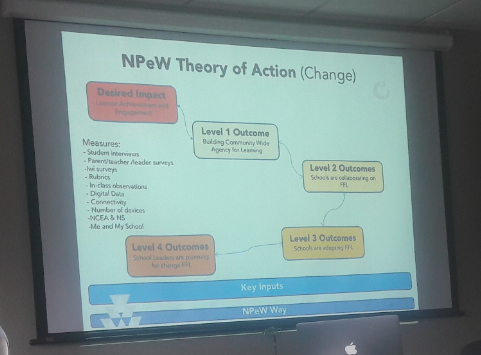
Why 'Me and My School'? (Theory of Action)
Outcomes of using 'Me and My school':
- Impact of NPeW
- Potential link to other data
- Useful assessment at multiple level (schools, CoLs, District)
- Input into school strategic plans for 2018
What does the survey measures?
3 main aspects:
- Behavioural
- Effective / emotional
- Cognitive (willing to try new things??)
Links to the Key Competencies
Getting staff ready for online survey:
- Use demo sites to introduce staff
- Teachers need to talk students through 'instructions' & 'about me' parts
- When students start with survey, advised that teacher should not be walking around, due to anonymous nature
Results:
- With online reports you can view interim reports
- Making sense of the reports - lots of different ways that data can be looked at / intrepid.
Tips:
Think about protocols on how to administer - maybe get students to all do it together in class or think about how it works best for your students. If someone is away, get them to do it when they are back. Aim to get all students to partake.
Conclusion:
This assessment tool is designed to give a school robust and systematic information about student engagement.
~ "Measure what you value instead of valuing only what you can measure" - Andy Hargreaves ~
I have been really interested in attending the consultation sessions, since the official announcement in regards to the addition to the New Zealand Curriculum from Education Minister Nikki Kaye and as Digital Technologies|Hangarau Matihiko is to be formally added into the NZ Curriculum by 2018 and fully integrated by 2020.
My notes:
Leadership / BOT session - 9.00am - 12.00pm
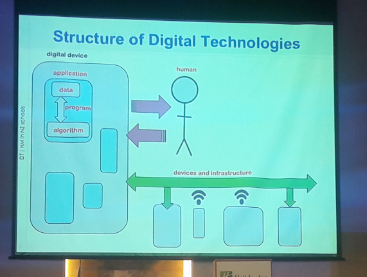
When thinking of DT, think about people using it.
Digital supports arts, science etc. It is not standing alone.
Timeline:
What is needed to teach DTIHM?:
Algorithms are not new to us. Give students the opportunity to learn the language.
- Writing a program brings the algorithm to life.
- Computational thinking is about how to create something new.
In Technological Areas part - (‘Computational thinking for digital technologies’ & ‘Designing and developing digital outcomes’) are the new part of the Curriculum.
How would you start a conversation about DT in your school? What does it look like? What is it about?
It is not about the pc that sits on the desk, but the pc that sits in the mind. Schools have autonomy on how to implement.
Teachers' session - 1.00pm - 3.00pm
Students should be "doing" computational thinking without computer / numbers (using alphabet)
How would you explain this whole new digital world to primary schools?
This is not about tech hardware, it’s about our brain.
We have a role as navigators and guides to our children
Creating with technology can have students feel ownership.
Algorithm comes up quite a lot in the new curriculum. All data is represented by using 2 values (binary code). A bit is the smallest bit of information...
As I am really passionate about technologies and how it can be used to support learning, I am looking forward to the implementation and embedding of ‘Computational thinking for digital technologies’ & ‘Designing and developing digital outcomes’ in learning by 2020.
In this Language & Learning Intervention workshop I attended, speech-language therapists worked with teachers and some parents in our cluster to provide learning support for our children with high language and communication needs. The support we were given was around being reflective of our communicative behaviours and how we can adapt and differentiate our interactions with students who have communication disorders.
Module 1 (Planning Language and Learning Goals):
Some children might have language, but can’t retrieve it...
Incentive: Think about your day yesterday... What activities did you do that involved language? What activities did not involve language?
Three components of language:
What? (are kids talking about) e.g. family, hunting, birthday, other children in class, farming, tractors, weekend activities, learning. This includes vocabulary labels, action and describing words. Think about the meaning of the message.
How? (understanding content and express in various ways) This may involve pointing, gestures, facial expressions, smiling, physical leading, eye contact.
Why? (the reason for communicating?) e.g. gaining attention to express feeling / telling the rules, needs met / want something, greeting, ask questions - can I?, responding, re-tell.
We need all three these components, otherwise something might break down.
When a child do not have the language they need to use, it is like a can of coke that is being shook, waiting to explode. Pressure was building up, they feel like they are on the back foot all the time. Anxiety might be increasing. Some children might be holding it together at school, but explode when they get home. Simple change in routine could inflict as well (e.g. reliever). This could be tiring for children.
Language underpins all learning. The four language steps are: Early Words User, Word Combiner, Early Sentence User and Complex Sentence User.
Reflection: It is therefore important to build children's expression and feelings about things and to build vocabulary.
There are four Conversational styles: Participator, Responder, Do My Own Thing and Reserved Communicator.
Responder:
Children rarely start the conversation and may find it easier to respond more to adults than peers. Adults might say the child "takes awhile to warm up".
Do my own thing:
Children mostly communicate about their needs and interests. They rarely respond to attempts to engage them in conversation. Adults might think they are "in their won world".
Reserved Communicator:
Children often have little or no response to your efforts to engage them. They rarely initiate and show little interest in people or objects in their environment. Adult find it difficult to engage the child.
Participator:
Children who initiate and take part in interactions. They are responsive and will try (and keep trying) to communicate. Adults might describe them as "easy to talk to".
Reflection: Think about strategies children might use to figure out what might be happening in classroom e.g. categorize, body language, ask, sensory cues, process of elimination etc.
Module 2 (Language and Learning in Action):
The features of a great conversations is the opportunity to talk, ask questions or to clarify.
Ask questions, safe - take risks, make mistakes, valued
Different props - creative, ties with children's name who will be the
leader, classroom displays (with care), work hanging up
Classroom conversations could include: Initiation, Response, Feedback.
Strategies to Encourage Engagement:
- Be face-to-face with children
- Respond to their attempts to initiate
- Notice children who are feeling 'left out' or uncomfortable
- Pause to give time for responses
- Make comments and wait for the child to initiate a comment
- Repeat and go slow
- Provide encouragement and explicit feedback
Acknowledge that you heard what child has said, by affirm, model, and extend.
Reflection: To extend is really important as you increase the opportunity for conversation. Don’t just label things for kids, otherwise they will do it back. Describe what happens in a picture, so that they can learn to do the same.
Idea: Feed in four 'comments' about the topic, before asking a question. That way language is 'fed in' and this will enable children to gather language to interact.
Reasons for asking Questions:
- To check children understand new information
- To check reading comprehension
- To prompt for more information
- To ask for clarification
- To stimulate thought
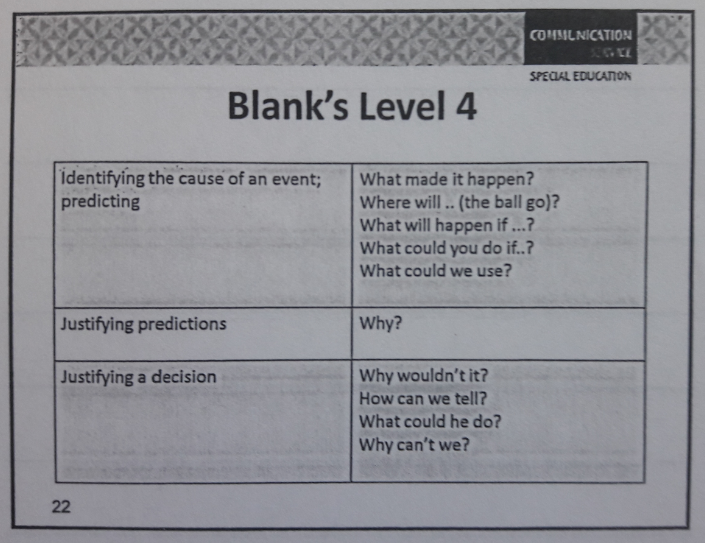
Blank’s Levels of questioning
Blank’s Level 1 is about immediate
Blank’s Level 2 is about properties, punctuation, comparing
Blank’s Level 3 is about what they know, relating
Blank’s Level 4 is about reasoning and why something has happened, justify
Reflection: When the goal is successful communication, match the question complexity to the child's language level.
~ "Language is the blood of the soul into which thoughts run and out of which they grow." - Olivier Wendell Holmes ~
Our school was fortunate to secure Anne Robertson for one of our Teaching Only Days. After posing the Key Question for this session: "How do we challenge the way that professional learning has traditionally been structured and make it more consistent with modern learning practice, that is collaborative, creative, daring and challenging and meets the needs of all teachers in your school?" we introduced ourselves and discussed what motivates us to learn. One interesting thing that came to the front was that learning styles can change and develop. Therefore, Professional Learning has to be meaningful, relevant and focused on how it is going to support our learners.
“The first rule of learning is that people learn what they need to learn, not what someone else thinks they should learn” Peter M Senge: The Fifth Discipline: The Art and Practice of the Learning Organisation
An exercise we had to complete was to think about three people on staff, think about their needs and put ourselves in their shoes when thinking about learning. It is vital that teachers should be considered in the same way we think about planning for our learners. We have to allow for different ways for teachers to engage in PL&D. One size does not fit all! Ownership and agency is essential if teachers are to engage positively.
Consider Knowles’ 6 principles of adult learning...
- Adults are internally motivated and self-directed
- Adults bring life experiences and knowledge to learning experiences
- Adults are goal oriented
- Adults are relevancy oriented
- Adults are practical
- Adult learners like to be respected
This can be easily applied to students as well, although not all of them might be motivated to learn, because they have to be in class / at school. What happens at home in the morning, might very well impact on how they learn...
Think UDL and cater for all learning needs in class, this however needs to be the same for teachers.
Image credit: Anne Robertson @robeanne 2016
Each of us had to think about our three teachers again while imagining one came across this small cave entrance with our three teachers... consider... What is my first instinct? What is their first instinct How would you feel if someone said to you - right we are all going to go into this cave now? Think about why your reaction is as is. What is it based on?
It might be hard for some to go in, having a fear of the unknown. This might be the same for people when having to learn new things. It might be easier to motivate kids, rather than motivate adults. Getting people out of their comfort zone. Tip for whānau engagement... think about cultural situations, think about that acting in a different culture could be quite scary.
We bring a whole lot of baggage with us when it comes to making decisions about what we do. Our Mental Model is shaped by the unspoken, unacknowledged, unrecognised assumptions we have just beneath the surface that guide our actions - positively and negatively. Our prior experience plays a huge part as does our situation and context - age, gender, family situation, school setting. And mental models often resist change.
It is important to remember that we all see thing from different perspective, due to our experiences. This underpins our values/virtues and beliefs.
Enablers and Blockers challenge...
What do we see as the ENABLERS to engagement in professional Learning at our school and what are the things that BLOCK people from engaging?
Sheryl Nussbaum talks about schools being “Future Ready” - there are 4 elements to being future ready. However, it is very important to consider as we develop Professional Learning programmes, that teachers are learners too.
An environment where the message is always ‘we are not good enough’ can be demoralising and counterproductive for all stakeholders.George Couros #Innovatorsmindset ln the book “The Innovator’s Mindset” George Couros talks about the need for leaders to trust, to allow a positive space for people to grow and develop their skills, to focus on strengths not weaknesses. Something to ponder... Do we look at strengths of people or do we always look at the negative? Finding people's strengths is so important. "When we build on our strengths and daily successes - instead of focusing on failures - we simply learn more” Tom Rath
Simon Sinek talks of how 'why' should be first, even before the 'how' and the 'what'. This seems a deceptively simple idea... But teachers also need a sort of personalised why… e.g. why should I adopt new practice. It has to be contextual to the way they teach and learn, to the students in their classes and the way that they are as teachers and learners themselves. It is possible for the ‘why’ to evolve too and it doesn’t have to be static. However, you can’t just change the ‘why’ without a moral purpose or reflecting on it and considering why it might have changed. Which is where Spirals of Inquiry come in…
Anne talked about an analogy that she heard of recently... consider a fire - what does it need to keep burning? (fuel and oxygen and space between the sticks for the fire to develop). If more sticks are being piled up on the fire, it collapses and has no space for the oxygen to keep fanning the flames so it suffocates and dies out. This is the same with teachers... they need to have space and time to keep motivated to learn and care should be taken not to overload them.
One thing that came through strongly though was the idea of time for reflection and consolidation which is represented in the Poutama - the Maori representation of steps that symbolise levels of learning and that after each step there is an opportunity to consolidate, to take a breather (rekindle the fire) and assimilate skills learned before moving onward and upwards. Key idea: We need to provide space for people to have inspiration. Don't keep on piling up... What can we take away... Allow teachers to take a step, and then have time to get an understanding and put learning into practice, before taking the next step. Engagement in PL&D isn’t an option but leaders need to model good practice, be sensitive and respectful of the learners’ needs and be warm but demanding just as we are with the students in our classes…
Building on the Poutama steps of knowledge acquisition with time for assimilation and consolidation of skills discussed earlier - and the spiral of inquiry - this idea of a spiral staircase that can provide space for teachers to focus on their practice and the needs of their learners, that encourages constant, ongoing reflection, and further inquiry is very powerful. A never ending spiral staircase of learning...
~ "You are never too old to learn. At no time ever say, 'It's too late to learn,' not until the day you die." - Kimani Ng'ang'a ~
An article I have written for New Zealand Interface magazine (Issue 74, September 2016) on using Augmented Reality (AR) with 5 year old students:
Inspiring and engaging my students to make their learning real is important to me and I know that technology has the power to enhance learning. I see it as essential to bring it into my classroom to focus the learning onto the students’ future.
One opportunity that it brings to learning is 'Augmented Reality'. I have been aware of using AR for a while, but it was when I was reintroduced during my postgraduate study (The Mind Lab by Unitec) that contextualised it for me.
Here are two ways in which I have used this in students’ learning through the AR app Quiver.
Cluster Summer Sports
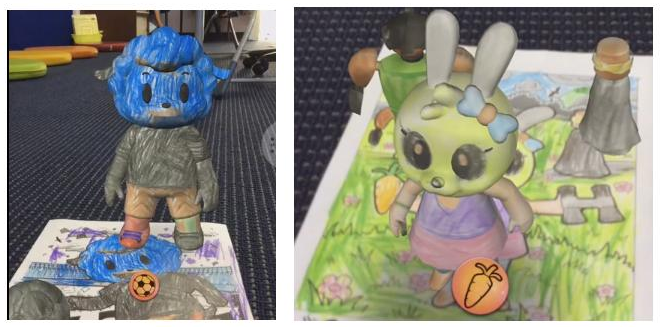
Firstly, they had fun reflecting and talking about their participation in a Cluster Summer Sports Day in which they were involved. Without the students even knowing, in this activity they were also touching on the Speaking and Listening component in the NZ Curriculum.
After choosing one of the two pictures provided (one for their ball kicking activity and the other for the game ‘rats and rabbits’), students coloured their choice using their favourite colours and then watched as their picture came to life just the way they'd made it.
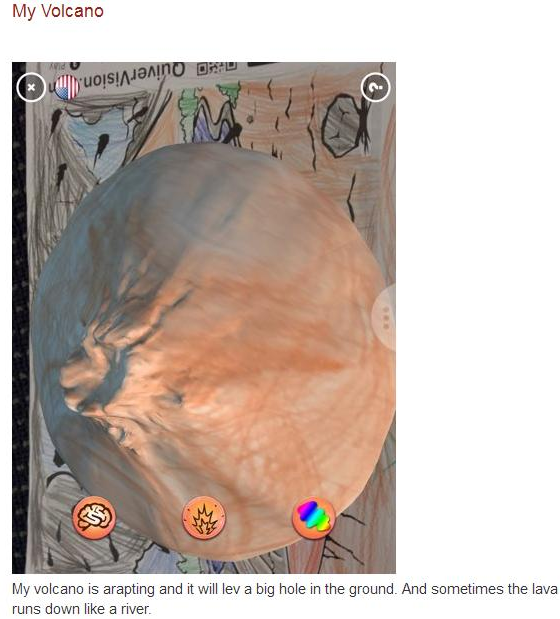
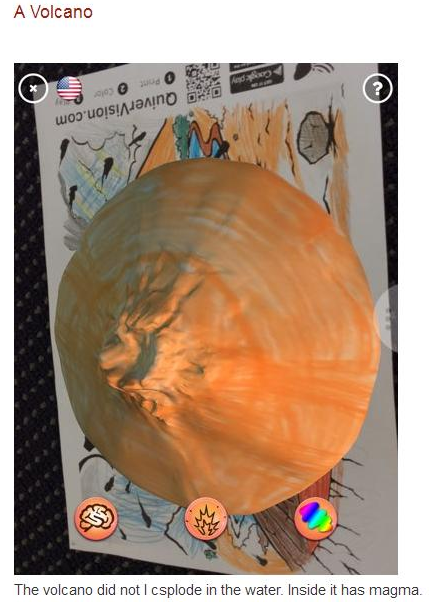
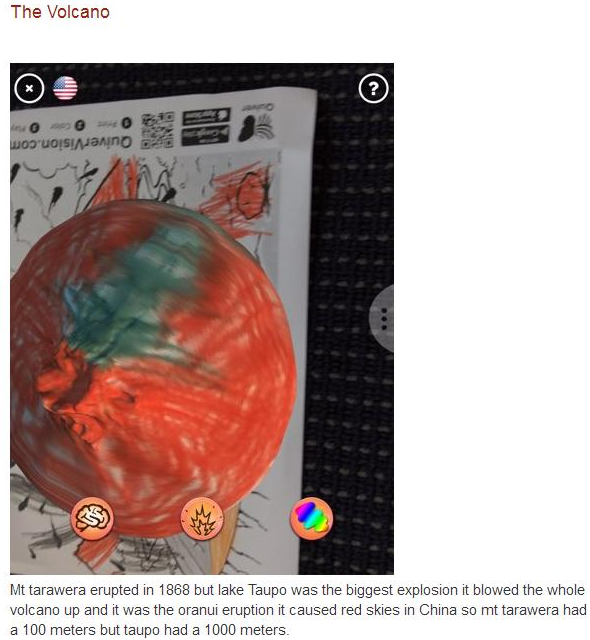
A second example was when students were learning and inquiring about volcanoes. I printed the volcano picture from the Quiver website. Students took a screenshot and wrote a story about it. They had the opportunity to choose how they would like to present what they knew and learnt about volcanoes. This has not only engaged them, but also enabled me to see what they have learnt. Writing has also becoming more fun, especially for the boys.
To experience students’ excitement and engagement in their learning, is priceless and shows me that engagement is critical to their learning. The use of these digital tools gives them the opportunity to deepen their skills in engagement, communication, collaboration, critical thinking, as well as creation. It also allows students with various learning styles alternate modes to interpret ideas and understand challenging concepts, enhance their engagement & success.
As I see the difference in the learning of my engaged students, it becomes easier to find ways to incorporate technology into their learning. And, in my experience I have found that AR can be used in all learning areas of the NZ Curriculum. Making a difference and engaging students is not about what I teach, rather, it is about how I teach. This experience has been life-changing for me. It really gave me an opportunity to make a lasting difference in the lives of my young students.
Screenshots from Interface:
~ "Reality is merely an illusion, albeit a very persistent one." - Albert Einstein ~
One of my responsibilities as Learning Facilitator for Ngā Pūmanawa e Waru is to organise the termly Connected Rotorua meetings.
I was lucky enough to have one of my Ngā Pūmanawa e Waru colleagues, Wendy Stafford, willing to present on the following:
Plan a lesson / unit for Future Focused Learning (using symbaloo as Self Regulated Learning tool) Incorporating:
- Key Competencies
- Thinking Tools (SMART Goals, De Bono's Hats. KWHL. etc.)
- Assessment Tools (SOLO, Blooms Taxonomy, etc)
Here is what Symbaloo offers: "Creating a Lesson Plan You can use Symbaloo Lesson Plans to create a gaming-style virtual lesson plan using the best educational resources. Tile by tile, create pathways for students so they may learn at their own speed. You’re able to change the route of the path by adjusting the arrows in any direction when creating tiles. Simply add videos, documents, questions, articles, and educational games that guide students through custom learning paths from start to finish." (Symbaloo)
"Personalizing Lesson Plans Not every student learns at the same pace. Some students require additional explanation on a particular topic and some simply need additional challenges. By adding questions to your Lesson Plan, you can test whether the student has understood the material. If the student answers the question correctly, they are able to continue. With an incorrect answer, you have the ability to write in an explanation for the student as to why their answer is incorrect before having a second attempt at the question. Students will learn the material at their own speed. There is also the ability to add in additional learning material around the pathway for students to have further explanations." (Symbaloo)
"Real-time Statistics Built-in analytics tools gather insightful data and improve learning outcomes, while students enjoy an engaging learning environment. How long has a student been working on each step? What questions were often answered incorrectly, and who needs extra help? The built-in grading tool helps students and teachers evaluate and archive results from multiple lesson plans." (Symbaloo)
Some of the attendants having a 'play'...
~ "You can teach a student a lesson for a day, but if you can teach him to learn by creating curiosity, he will continue the learning process as long as he lives. "
My thoughts after attending another EduCampNZ, this time one in the Bay Of Plenty:
Learner Agency is a topic that has been talked about a lot [since] a couple of years ago. My perception is that an EduCampNZ is the perfect place for teachers to take ownership of their own learning. This is Teacher Agency in Professional Learning & Development at its best!
What I enjoy about attending EduCampNZ is the networking and informal chats one can have with teachers from all over New Zealand as well as building face to face relationships. I like the fact that teachers have choice and voice. Anyone can be a presenter and anyone can attend. It is great to hear about best practice and to get 'tips' from others and also being able to share your ideas and experiences.
If you haven't attend an EduCampNZ yet, there are events happening all over NZ. Events can be found on the EduCampNZ wiki.
You have the power to take control of your Professional Learning & development, you can develop ownership of your learning. Why wait any longer?...
The 'It's all about maths' symposium focused on connecting mathematics across the curriculum...
Using Digital Tech to learn maths: Transforming the learning? Keynote: Dr Nigel Calder
"Digital technologies are everywhere in our lives. We use them to communicate, research, process, record and for for entertainment. They influence the way we interact in the world, the way we live. We use them in work and play. How might they change the learning process?" (Nigel Calder)
Overview
Affordances
Influences on the learning process
Research projects
Some effective apps
How do you use digital technologies in your maths programme?
Technology might take the student 'somewhere', but it might not always optimise the learning. It is about the pedagogy and the learning, thus pedagogy is critical and it is not a matter of having apps or having technology, the reason becomes the critical thing. Apps should be about purpose/pedagogy for learning.
Affordances - What are they?
"Affordance implies the complementarity of the animal and the environment. They are not just abstract physical properties" (Gibson, 1979)
Visual affordance: Tinkerplots, Multiplier
Interactive apps: Sketchpad (look at: ‘geometry for young learners’ site), Touchcounts 1.0, Maths shake.
Tech gives non-judgemental feedback which might facilitate: risk-taking, an investigative approach, collaborative approaches, engagement, alternative learning trajectories, reshaping of the learning.
Moyer-Packenham and Westenskow (2013) identified app affordances as focus constraint, creative variation, simultaneous linking, efficient precision, motivation. These affordances interact and appear to be mutually influential of each other.
A five-stage developmental process when learning to integrate a particular technology:
- Recognizing (knowledge)
- Accepting (persuasion)
- Adapting (decision)
- Exploring (implementation)
- Advancing (confirmation)
Teacher knowledge for learning with technology: (when considering apps)
- Focus on the mathematics and learning outcomes
- Facilitating teaching and learning
- Re-organising learning - seeing connections
- Mathematical thinking and problem solving
- Self-correction and reasoning
- Making mathematics attractive and motivating
- Recording thinking and opportunities for collaboration
Aspects that underpin all themes:
- Student-centred
- Encouraging ownership of learning, eventual self-assessment and direction
- Get students to explain their thinking, it is powerful
- Teacher open to new technologies, ongoing learning
- School support with access to devices, reliable wifi, technology
- Herding cats... this is kind of what we do... it is not an easy job
- Task and apps should focus on the learning
- Foster creativity and self-directed learning
- Use them to optimise the learning situation
- Facilitate learning
- Give insights into students strategies and mathematical thinking
- The apps are built for purpose
Workshop 1: Making the most out of e-ako
Having a class in e-ako maths enables you to monitor your whole class' progress. Pathways are unlocked so you can look ahead and see what your students will see, but students will still need to follow the pathway. You can unlock steps by emailing Andrew.
Tip: Collate all students' names on a spreadsheet with a class email account. You can do this from eTap. Save as CSV file. Student names can then be important as bulk.
Workshop 2: Problem solving with juniors
Explore problem solving in a junior context
Task design
Integrating digital technology
How to problem solve with juniors?
1. Launch the problem (try and get them to read out problem themselves - literacy link here)
2. Independent think time
3. Small group sharing
4. Reporting back
5. Student self-assessment
Hints for Launching the Problem:
- Staging the problem - acting it out
- What do we know about the context of this problem
- Retell this problem to your partner
- What information do you know? How are you going to use it?
- Where is the question? What is the problem asking you to do?
Reporting back - Why is it important?
- To expose students to a range of thinking
- To foster mathematical communication skills
- To increase students’ confidence
- To clarify common misunderstandings
- To provide a foundation for the extension of a problem
- To highlight the mathematics inherent in the problem
Sharing back
Get students to role model and show what they did
Self-Reflection Questions to consider
- What did you notice
- What are the students' next steps
- What went well
- Goals for next time
Workshop 3: Developing student agency through a growth mindset
Agency and Growth Mindsets are both big in their own right. The aim here is to put the learner in the driving seat. However, when you are in the passenger seat for the first time, it is a very weird feeling, as you have to let go of the controls. Giving students control is a risk, but they are also taking the risk as a learner...
Give students ways to talk and think in a 'Growth Mindset' way, rather than them saying "I can't do it, I will never get to do it". The word 'yet' is powerful to use.
How can we encourage students to develop student agency and a growth mindset?
Move away from making all the decisions, what books they are going to read, what maths equipment / tools they are going to use.
Teachers also have to develop a growth mindset:
- Use technology to make both their own and students' learning richer
- Risk trying new learning
- Bring their own student passion into learning activities
- Let go of the need to control all variables
- Find ways to change even under adversity
- Value relationships with students
- Make a difference in student lives
- Network and connect with others for resources, assistance and support
Learning Mindsets/beliefs:
- Growth Mindset: Value mistakes and use them. Talk more about struggles and strategies to overcome them
- Sense of Belonging: Student Voice (What can I do as a teacher to help you more? What can you do to help yourself?). Ethic of Care
- Relevance: students will be more engaged if learning is relevant and they are given a choice
- Self-efficacy: when students understand their goals, they can monitor their learning and it is going to be more meaningful for them
Student Self Assessment 'tools' to support self managing:
When teachers and students focus on improvement rather than on whether they're smart, kids learn a lot more when they had a deeper understanding of themselves as learners, so they could build their own autonomy to change and gain confidence in their academic abilities
Reflection:
My aim with attending this symposium was to learn further how I can take sensible steps to provide and maintain a teaching and learning environment through my planning. I wanted to make sure that I select the right approaches to address the needs of all my students. This day was worthwhile and I walked away with lots of new ideas to implement with my students.
Next Steps:
To put my learners in the driver seat by developing learner agency in our learning environment. To step back a bit and let the students taking a little bit more ownership.
~ "Pure mathematics is, in its way, the poetry of logical ideas" - Albert Einstein ~
After a very busy ten weeks, the term has come to an end.
Although we worked hard on reading, writing and maths, other learning areas played a just as important part in helping students on their path to become risk takers and confident, life-long learners.
Areas that I [also] focused on was 'Digital Citizenship' to make students aware of the ‘dangers’ and to increase knowledge of how to keep themselves safe online and 'Digital Literacy' to enable students to create digital content and adding media independently. There were times that we had to revisit some topics more than once to ensure that students grasped the concept.
Students had a go at using the 'Quiver' app (for our inquiry topic) to colour a volcano picture and to then write a story about it. It was great to observe that some students were starting to think about how to share their learning, asking if they should write the story using the iPad (easy blogger jr) or in their books. I gave them the opportunity to choose.
The use of 'Explain Everything' to engage students with their reading books was really going well. My next step here would be to get them to use this ‘without instruction from the teacher’.
Students also enjoyed using the 'Write About This' app and we received some lovely feedback.
KidsedchatNZ had again proved to be a valuable tool to support our students' reading and writing abilities. One week I had one of the senior students running our tuakana/teina session, which was a great success.
I also included a lot more 'problem solving' maths activities and it was interesting to see how students approached the problem after it was launched. They were interested to hear what their peers had done. Some students were able to explain the process to others that struggled through the problem. This was powerful as students showed the solution in smaller steps to their peers.
To make our tuakana/teina buddy reading session with Room 3 effective, we looked again at the purpose of buddy reading and what needs to be focused on. Ideas were brainstormed on what effective buddy reading looks like, sounds like and feels like.
Students have been involved in many 'hands-on' and 'thinking' learning activities and their progress was evident when assessments were carried out. I feel incredibly proud of what my students and I achieved.
What is something new to try and where to next?
To set up Skoolbo accounts for my learners to provide each one of them with a personalized learning experience to further improve their maths and language skills.
~ "The expert in anything was once a beginner" - Anonymous ~
What a fantastic turn out for our session on using Google Classroom as a structure to support Future Focused Learning, with staff from nine out of the [current] twenty Ngā Pūmanawa e Waru schools attending.
Hancine and I came prepared with our presentation slides, but with the number of attendees, decided to change 'the plan' and Hancine quickly sussed out that the knowledge were in the room.
There were many new faces and we got underway with the usual introductions, whereafter people that felt comfortable, took up the role of leading a small group in setting up and using Google Classroom. The collaboration among our educators were great.
If you are interested in learning more about Google tools for the classroom have a look at Monica's Google Site 101. Thank you for sharing this, Anne.
A warm thank you to all who attended the session on a wet Friday afternoon/evening.
~ "Everyone you will ever meet knows something your don't." - Bill Nye ~