Showing posts with label Reflection. Show all posts

Tuesday, December 14, 2021

The end is often the beginning

This year was a transitional time for me.

I started teaching at a new school and had the privilege to make connections with some amazing people.

Therefore, I was able to deepen relationships that supports me, and to recommit to good habits. I learned new ways of doing things and to stretch my point of view.

In my classroom, I have had the privilege of seeing and experiencing how my five and six year old students developed into confident learners.

As this school year comes to an end, I can attest that it was a wonderful 'journey', an 'annus mirabilis' in many ways. I am so incredibly blessed to [now] have a wonderful job, where everyone's well-being is at the forefront. 

If testing times (especially during 2017 - 2020, so not just an 'annus horribilis', but 'horribilis annos'!) taught me anything, it would be this...


~ "Year's end is neither an end nor a beginning but a going on, with all the wisdom that experience can instill in us" ~ Hal Borland


Friday, December 4, 2020

End of an 'era'

Have you ever taken a step 'backwards' in your career to consciously chase more balance in your life and to be able to do things that will make you happy and not doing things, trying to please or appease others? 

Well... I have and therefore officially resigned from my position [4 December 2020] at the school where I have had various roles and responsibilities for 12 years! I just couldn't go with the 'flow' any longer and a lot of things that I saw broke my heart, but fixed my vision.

I have decided to stop saying yes to people and situations that don't support my well-being. Instead, I decided to say yes to my happiness, and yes to my growth, and yes to all the people and things that inspired me to be authentic and whole, while at the same time accepting me just as I am.

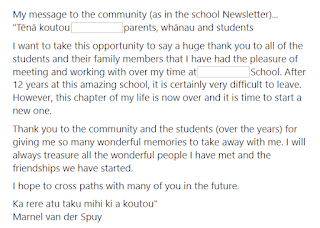
This was my message to the community...


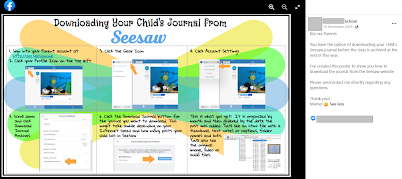
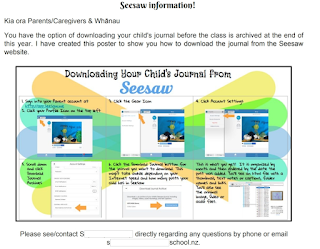
Today, I also noted [some] of my original work (below with my name next to it) published under some other staff member's name...


The following has been copied and published under the person's name who started with a 'S'. I took the rest of the name out...


If you [for whatever reason] read this post, I just want to let you know that 'your poster' which is my work, recycled, is plagiarism. Sadly some education 'leaders' need to reflect on what it means to ask permission and give credit. You've left a bad taste in my mouth and I'm glad I no longer associate with you. 
No one does any work in our field for anything other than the children and communities we serve (which is a privilege), but passing off someone else’s work as your own and sharing it with no credit to the original source as your own idea is just sad.

I'm honestly happy to say this is the end to an 'era' for me at this school and I leave with the following...

Quitting is for winners.

"Contrary to popular opinion, quitting is for winners.

Knowing when to quit, change direction, leave a toxic situation, 
demand more from life, give up on something that isn't working
and move on, is a very important skill that people who win at life
all seem to have.

But don't quit because it's hard.

Quit because it sucks."
(Source: Unknown)


Friday, December 27, 2019

A Year in Review and a quick Reflection

Looking back on my 'I see it..., I want it..., I dream it...' post at the start of the year, my one word was 'SEE'...

Reflecting on my 'SEE'

1. I will be open to seeing the possibilities, the problems, the solutions and the milestones that can be reached every day.
2. Focusing more on the “why”, not just the “what” and “how” when stepping back from the day-to-day planning and details of my work, will allow me to not only see the big picture, but also the immediate achievements and needs.
3. I would like to see that the link between our school, parents, whānau and community where our school's educational goals are concerned are understood and supported. This will enable us to further create and nurture relationships of trust.
4. My job will be done if I could see the simple question “What’s best for ________?” being asked and acted upon. After all, staff well-being is crucial, and it is also our responsibility to ensure that students are excited about learning and to inspire a deep love for learning.
5. I know that the insanely long hours I work, is not contributing to recuperating and focusing on myself. I achieve my goal of seeing myself take time out at least once a week, to 'de-stress' and to improve my work-life balance to avoid burnout.

Highlights for me this year
1. Some of my Professional Development included:

  • Strengths-based Leadership Development - Rob Clarke, Learning Architects (2019 - Current)
  • The Coaching Habit - Anne Giles, Direction Worx (2019)
  • Empowering Leaders to Empower Learning - Leanne Angland (2019)
  • Stress Management and WELL-being - Rotorua AP/DP Association (2019)
  • Igniting your imagination in Digital Technologies and Hangarau Matihiko meetup - MOE (2019)
  • Level 3 Special Learning Disabilities Course - SPELD NZ (2019)
  • HiveSummit (14 day) Virtual Educational Conference (2019)
  • Notice & Adjust: Supporting Students with Learning Difficulties workshop - Neil MacKay (2019)
  • Story Ways Literacy: Storytelling Schools NZ (students learn to develop great oral communication skills while mastering the language and ideas they need for subsequent writing) by Liz Swanson (2019)
  • Accelerated Learning in Literacy (ALL) start up workshop - Kath Jones & Colleen Wills (2019)
  • Developing an effective writing programme workshop by Sheena Cameron & Louise Dempsey (2019)
These PD opportunities opened the seeing of possibilities, the problems, the solutions and the milestones that could be reached every day. It also assist in often focusing more on the “why”, not just the “what” and “how” when stepping back from the day-to-day planning and details of my work, which allowed me to not only see the big picture, but also the immediate achievements and needs.


2. Teaching as Inquiry:
After administering an Oral assessment, I analysed the data, which helped me to identify target learners who are ‘at risk’ and their specific areas of need. I then started my 'Teaching as Inquiry' by asking: "How can I use a Storytelling approach to accelerate target learners and enhance their oral language skills through retelling of stories, news, after guided reading & using Seesaw, which will then also result in authentic writing experiences?"
~ 'He mana tō te kupu' - 'Words have great power' - a whakataukītanga kōrero (proverbial saying) ~

I planned deliberate activities that meet the needs of these learners, whilst also capitalising on spontaneous authentic learning opportunities that support oral language development.

Student achievement can be seen as shown in the end of year spreadsheet below.
It should be noted that the my student whom only made 1 Stanine’s progress received Speech Language Therapy support and also has had a Language Learning Intervention plan by an outside agency. Unfortunately, funding for this was only available and in place for Term 2. However, I am pleased with the overall outcome of this inquiry.


3. My Presentations:

  • Digital Technologies | Hangarau Matihiko: Build knowledge - Develop Knowledge - Follow up and teaching lessons, activities and resources provided (Staff meeting - 29 July 2019)
  • Digital Technologies | Hangarau Matihiko: Build knowledge - Develop Knowledge (Staff meeting - 1 April 2019)
  • Seesaw: The Learning Journal - Need to know (Staff meeting, especially for all new staff - 4 February 2019)


4. End of Year Highlights:
I received so many lovely messages and gifts... here's just a few messages... #EndOfYear #FeelingBlessed


~ "The attitude you bring to the day is what the day will bring to you. Great attitude. Great day." - Unknown ~

Tuesday, December 18, 2018

A Year in Review

Looking back on my 'Walking on a tightrope' post at the start of the year, my one word was 'DO'...

Reflecting on my 'DO'
  1. Get-up-and-Go (be determined and full of energy) - This I have definitely achieved in all areas this year. 
  2. Stop and celebrate [even little] Successes - Yes, not only did Seesaw's ePortfolio enabled me to regularly check in and comment on students' progress, which has been celebrated weekly by a 'Virtue award', but progress was recognised and celebrated almost daily in our learning environment. 
  3. Look after myself (no school work after 6.00 pm) - Although I did look after myself, I was not able to do no school work after 6.00pm... in fact due to all my responsibilities, I have been working later than I have last year, even during weekends! Maybe this goal was a bit unrealistic?
  4. Continue DOing [something] despite difficulties (stick-to-it-iveness) - Thankfully, I did not experience any difficulties (personally)
  5. Do what I believe to be best for ALL my students as they are my number one priority - As I understand the importance of inclusive education and that for some learners to access the curriculum and realise their potential, I was able to focus effectively on curriculum adaptation and differentiation.
  6. In my role as Assistant Principal and ICT Lead, I will take the 'bad days' in stride and remember that I get to start fresh tomorrow - One of my leadership strengths, I believe, is to actively support colleagues, reframe dialogue/thought processes to eliminate deficit thinking and focus on the capabilities, progress and successes. I have been able to transfer this effectively in my leadership role, enabling and fostering a positive, safe and united culture where successes are celebrated with all staff. As an effective communicator, I demonstrated exceptional communication and interpersonal skills in my current roles, supporting staff as and when needed. 
  7. Blog more regularly - Not yet...

Highlights for me this year
1. Some of my Professional Development included:

  • SENCo Development and Training online course/study through Raising Achievement
  • Embedding Oral Language Across the Curriculum workshop by Sheena Cameron & Louise Dempsey 
  • Anxiety, Learning and Behaviour workshop by Dr. Izelda Pelser, Educational Psychologist, MOE 
  • ‘The Developing Brain’ workshop by Nathan Mikaere-Wallis 
  • Online training to be recognised as a Seesaw Ambassador
  • Digital Passport: Workshop One - Years 1 - 3 Certificate 
  • Digital Passport: Workshop Two - Years 3 - 5 Certificate 
  • ‘Setting your School up for Success’ seminar for SENCo / RTLB / RTLit
2. My Presentations:

  • Digital Technologies & Hangarau Matihiko: Build awareness and mobilise (Staff meeting - 11 June 2018)
  • Collaboration for Success: SENCo and Learning Difficulties (Staff meeting - 28 May 2018)
  • Digital Citizenship & Cyber Safety (Staff meeting - 14 May 2018)
3. Teaching as Inquiry:
After administering an Oral assessment, I analysed the data, which helped me to identify target learners who are ‘at risk’ and their specific areas of need. I then started my 'Teaching as Inquiry' by asking 'How can I enhance students’ oral language skills through retelling (news & after guided reading) using Seesaw, which will then also result in authentic writing experiences?'

I planned deliberate activities that meet the needs of these learners, whilst also capitalising on spontaneous authentic learning opportunities that support oral language development.

Student achievement can be seen as shown in the end of year spreadsheet below. 
  
Although Student 4 still requires some support (student had trouble with attendance), I am pleased with the overall progress.

4. Other:


5. End of Year Highlights:
I received so many lovely messages and gifts... here's just a few messages... #EndOfYear #FeelingBlessed


~ "Teachers should not forget how far they take their students every year" ~

Friday, December 15, 2017

End of Year - A Quick Reflection

With my 'Possibilities, Options and a Course of Action' post at the start of the year, I was looking forward to pursue the many things that was twirling around in my head...

Unfortunately, I did not always 'stand firm' mentally and emotionally when challenges arise, so my one word, prudent (adj) 'acting with or showing care and thought for the future' did not always come to fruition, as there were days I was not ready for some unexpected challenges / bumps in the road.

One of my biggest 'problems' was that I felt tired, tired and tired. I question myself constantly as to my lack in motivation to effectively use my PLN (Twitter, VLN, EduCampNZ) and colleagues to create productive working relationships by learning from others, asking questions to find out the thoughts of others and to reflect understanding. 

Many days, I felt like "Forget Everything and Run" rather than to "Face Everything and Rise." (the two meanings of F-E-A-R according to Zig Ziglar).

The following post on a closed group also made me wonder if this showed what teaching became for so many in 2017... yes there are other stories too... unfortunately.


Throughout my unexpected challenges, I think I stayed true to my students... one example:
Two of my ‘at risk’ Māori students (Student 2 and Student 3) experienced difficulty with oral language. 

I reflected on why this might be and came to the conclusion that the pronunciation of Māori vowels in relation to English is quite different, which could very well contribute to their specific areas of need. A ‘non-confident’ Māori student, can find this extremely difficult and result to them finding it hard to follow instructions, process information etc.
I planned deliberate activities that meet the needs of these learners, whilst also capitalising on spontaneous authentic learning opportunities that support oral language development. 
Steps was to:
- Locate, create and utilise a variety of activities/resources support sequencing development.
- Use Big Books and Cards, and use the planning support that accompanies these to develop oral language.
- Use guided reading lessons to continue modelling and promoting retelling of text with a focus on oral language.

Although Student 2 still requires some support, I am delighted with the overall progress - as this was a student who did not talk at all to start with.

Progress can be seen as shown in the end of year spreadsheet below. 
All the blue areas, were areas of concern. Now it is only the two green areas, which I am confident will be shifting further [as well] in the coming year.


One of the best parts of this year [for me] was working in classes alongside teachers and ākonga to develop capability in pedagogy (teaching and learning) and the use of technology as a tool to support learning in my role as 0.2 learning Facilitator with Ngā Pūmanawa e Waru. Part of our (my) role was to working through and with the wider community to enable ubiquity (every where, anytime) of learning, honouring an authentic Rotorua and Arawa context, foster collaboration for learning across Rotorua (I have a G+ community for junior school teachers where we share resources / ideas) and to build knowledge about Future Focused Learning. I have been working with teachers and school leaders (I engaged regularly with principals about growth in teacher adaptive confidence and professional development) by embedding effective future focused teaching, using learning technologies to build learner competencies. 

End of Year Highlight:
Received a choc bar with this lovely message from a student! #EndOfYear #FeelingBlessed


~ "Ships don't sink because of the water around them; ships sink because of the water that gets in them. Don't let what's happening around you get inside you and weigh you down... stay up." - Unknown ~
Wednesday, December 21, 2016

A year in reflection

This year I had again choose one word to focus on... 'Fierce' the word that gave me the possibility of doing things deliberately this year.
 

Highlights (accomplishments, best memories)
  • Completing my Post Grad Study in Applied Practice (Digital and Collaborative Learning). I did not find this to always be easy, especially while full-time teaching, but what a positive journey this experience was overall.
  • Sharing my skills and knowledge with colleagues in the district as part of my role as Learning Facilitator at Ngā Pūmanawa e Waru (NPeW). Two post to demonstrate: Supporting Junior school teachers as Learning Facilitator and Supporting change as Learning Facilitator.
  • I have been kinder to myself and therefore was able to finally work towards achieving a work-life balance
Game changers (unexpected events that shifted my priorities)
  • I have been fierce in re-connecting with myself, knowing who I am and what I am capable of. Therefore, I voiced my perceptions 'bravely' on numerous occasions when necessary and appropriate
Things I focused on (what I put the most of my time into)
  • Trying to understand that not everyone is ready for change and that I see things differently than my colleagues
  • As a leader, to trust and allow a positive space for people to grow and develop their skills, to focus on strengths not weaknesses 
Things I forgot (didn't get around too)
  • Partake in as many twitter chats as I would have like to and connecting with my Twitter PLN on a regular basis

Reflection
At times it was [still] easy to forget that reaction is human... no matter how good the intentions. I will need to keep this in mind, as 2017 will surely bring [many] challenges of its own. I will be in a position of leading / supporting change in many purposeful ways. Most importantly, I will be a learner myself.


~ “The first rule of learning is that people learn what they need to learn, not what someone else thinks they should learn” - Peter M Senge: The Fifth Discipline: The Art and Practice of the Learning Organisation ~

Friday, December 16, 2016

What have I learnt this year?

Teaching as Inquiry and Appraisal is a process to help improve teaching practice and to prove that you are meeting the obligations and requirements of being a professional. Our school’s appraisal process integrates the two of these into a process that is based upon evidence, mutual trust and respect.
“...effective pedagogy requires that teachers inquire into the impact of their
teaching on their students.” NZ Curriculum, p35

This year I 'connected' this with our eLearning Plan and focused on Digital Citizenship (to make students aware of the ‘dangers’ and to increase knowledge of how to keep themselves safe online) and Digital Competency - Literacy (enable students to create digital content and adding media).

Baseline date compiled, showed a “current state” where my Year 1 students lack confidence in Digital Competency - Literacy. Although only a limited number of students were interviewed, my inquiry had a whole class focus and was not limited to specific students.

My Focus Questions were:
How can I  use eLearning tools (digital resources/ iPads /ePortfolios to support the class) to:
- Teach students about digital literacy and citizenship
- Support students to be engaged with what they are doing to improve learning outcomes
- Use eLearning to enable students to become thinkers and risk takers and reduce          dependence on teacher

eLearning tools and learning opportunities I trialed [with success] were:
- Easy blogger Jr
- Explain Everything
- Write About This NZ
- Quiver (Augmented Reality)
- KidsedchatNZ

I made sure that eLearning tools served a purpose when digital content was created to enhance learning as I strongly believe that the tool should be used to support learning.

We worked hard together to achieve the desired 'outcome' and getting positive feedback along the way sure helped and served as motivation.


Through consistent reflection it became evident when I had to revisit or changed what (and how) I do and where I needed to change direction and start again.

What have I learnt?
- I had to learn to ‘let go’ to enable students to become thinkers and risk takers to reduce dependence on teacher
- Things don’t always pan out in the best way possible and I had to consider theories about why something might be happening, which helped in my critiquing.

Reflection / Next Steps:
I feel that in many cases, the 'task' set contributed to students' critical thinking as they had to think what's needed to focus on for the learning outcome. I'd also hoped that students would 'integrate' / use technology naturally to explain their work. However, many times I still had to ask [them] if they would like to share their work on their blogs, using one of the apps. I don't think they see / understand the possibility of an iPad as tool to create / explain learning yet. Therefore, something I will need to work on next year is to make them aware of the potential this holds for learning.


Resources:


~ “To be digitally literate is to have access to a broad range of practices and cultural resources that you are able to apply to digital tools. It is the ability to make and share meaning in different modes and formats; to create, collaborate and communicate effectively and to understand how and when digital technologies can best be used to support these processes.” - (Hague & Payton, 2010) ~

Saturday, October 8, 2016

uLearn16 - "Connect, Collaborate, Innovate"

"Coming together is a beginning. Keeping together is progress. Working together is success."- Henry Ford. 
This quote resonate with me throughout [and after] this conference and I have to say that for me, these yearly uLearn events are just getting better and better...

Conference strands this year were:
- Transforming Learning and Assessment
- Transforming Professional Practice
- Transforming Leadership


Keynote Speakers:  Collaborative notes
Keynote 1:  Larry Rosenstock - It's time to change the subject
"We are starting to see more and more schools around the world that are atypical. They do not mis-predict which students can and can’t do. They do not segregate students through structures that we see in most traditional schools. The people running these schools recognise that the world is changing. These are special places that are preparing their students for the innovation economies that their countries so profoundly need."
'It's time to change the subject' blog post
CORE Education, uLearn Blog (Larry Rosenstock Keynote) - Submitted by Tessa Gray
Key takeaway: "We, as educators, must pursue the relentless creation of invention and reinvention"

Keynote 2: John Couch - New dimensions in learning
"If students are engaged, they will succeed and technology plays a vital part in their engagement."
'New dimensions in learning' blog post
CORE Education, uLearn Blog (John Couch Keynote) - Submitted by Tessa Gray
Key takeaway: “Education is what people do to you. Learning is what you do for yourself”

Keynote 3: Michael Fullan - Early lessons from implementing New Pedagogies for Deep Learning
"Our work on School Leadership, Professional Capital and Coherence is becoming deeply integrated and embedded in the clusters and networks of schools that are engaged in implementing ‘new pedagogies'. He identified some early lessons concerning how leadership for deep learning differs when it comes to digitally accelerated innovations. There were also some surprising new findings about the role of students as change agents relative to pedagogy, school organisation, and even societal change."
CORE Education, uLearn Blog (Michael Fullan Keynote) - Submitted by Tessa Gray
Key takeaway: "The job of leaders is to help learners run better"

Keynote 4: Karen Spencer - Beyond the echo chamber: The extraordinary possibilities of a networked profession
"Karen took us on a provocative journey to explore the rapid rise in innovative professional learning. From ‘done to’ staff meetings to collaborative, agile investigations into what’s happening for our learners, the way educators improve and grow has evolved rapidly in recent years. She explored new insights into professional learning, best ways to embrace change, and invited us to think about how we can transform what we do for our learners."
'Keep the fear off the set' blog post
CORE Education, uLearn Blog (Karen Spencer) - Submitted by Tessa Gray
Key takeaway: "Hold our ideas lightly"


Day 1:
  • Breakout 1 - Working towards developing student agency in maths with Jacqui Sharp

Key takeaway: "Before students can be expected to take responsibility for their own learning, there are procedures that need to be mastered. To facilitate this, tasks and workshops should be designed so they are student centred, personalised and challenging. Students grow control of learning through the choices and the reflections they make. Student voice is encouraged and articulates progress, which in turn informs the teacher about further teaching, learning and assessment." 

  • Breakout 2 - What agoggies and self-regulated learning with Mike Scaddan
Key takeaway: "We need to be teaching kids the skills of 'learning how to learn'. But keep in mind that all kids maturation levels are different so they will not all be ready to learn this at the same time. Heutagogy is developmental not necessarily age related. Technology can definitely help to teach the skills needed for self directed learning and growing assessment capable learners."


Day 2:
  • Breakout 3 - A day in the life of a 1:1 iPad classroom (Y0-2) with Richard Williams and Sophie Church

Key takeaway: "Technology is used to extend and reinforce learning, thinking, collaboration, key competencies and to share the students' learning with Whānau."

  • Breakout 4 - A roadmap for strategic leadership of digital technologies with Ray Burkhill and Viv Hall

Key takeaway: "Using a strategic roadmap helps to bring sense to the challenge of ensuring effective pedagogy is driving the use of digital technologies in our school. It also gives a strategic direction that ensures digital technology is integral to building our school’s effective pedagogy and future-focused curriculum."


Day 3:
  • Breakout 6 - Supporting staff through change — professional learning models with Anne-Louise Robertson

Key takeaway: "Ask teachers why they are reluctant to change their practice. Helen Timperley suggested that engagement in PL is not an option, however we should keep in mind those teachers who’s mental models are such that they struggle to engage through fear, being overwhelmed, the context they find themselves in and balance that with the 'go getters.' Leaders need to model good practice, be sensitive and respectful of the learners’ needs and be warm but demanding just as we are with the students in our classes… What do we need to keep the fire burning..?"


  • Breakout 7 - Building capability through Future Focused Learning
This year, I stood back and let a colleague, Hancine Samvelyan, be the main presenter in this workshop. I saw my role as merely supporting, as she decided what slides she wanted to use for the presentation. Her focus was on collaboration as a process.


Many participants felt uncomfortable and challenged within this workshop and the task, but I like the growth mindset displayed from a participant...


Other things happening:
- What you thought of Day 1


I actually love these conferences because you can always take something away. The workshop that I was at, was quite amazing. My one was about learner agency and it actually told me some steps on how to scaffold my kids to that stage. It was something I could go away with and tweak and modify, it was more for the older stages, but there were lots of examples and things that I can take and adapt to my student needs to help them get to the next steps.


Gala Dinner

#eFellows14

with Hancine

with Bede

with Nick

with Stephen


Wristbands received - I got 'em all! Yay!


~ “Continuous learning is the minimum requirement for success in any field.” 
- Dennis Waitley ~

Friday, July 8, 2016

Reflection on Term 2, 2016

After a very busy ten weeks, the term has come to an end.

Although we worked hard on reading, writing and maths, other learning areas played a just as important part in helping students on their path to become risk takers and confident, life-long learners.

Areas that I [also] focused on was 'Digital Citizenship' to make students aware of the ‘dangers’ and to increase knowledge of how to keep themselves safe online and 'Digital Literacy' to enable students to create digital content and adding media independently. There were times that we had to revisit some topics more than once to ensure that students grasped the concept.

Students had a go at using the 'Quiver' app (for our inquiry topic) to colour a volcano picture and to then write a story about it. It was great to observe that some students were starting to think about how to share their learning, asking if they should write the story using the iPad (easy blogger jr) or in their books. I gave them the opportunity to choose.
The use of 'Explain Everything' to engage students with their reading books was really going well. My next step here would be to get them to use this ‘without instruction from the teacher’.
Students also enjoyed using the 'Write About This' app and we received some lovely feedback.

KidsedchatNZ had again proved to be a valuable tool to support our students' reading and writing abilities. One week I had one of the senior students running our tuakana/teina session, which was a great success.

I also included a lot more 'problem solving' maths activities and it was interesting to see how students approached the problem after it was launched. They were interested to hear what their peers had done. Some students were able to explain the process to others that struggled through the problem. This was powerful as students showed the solution in smaller steps to their peers.

To make our tuakana/teina buddy reading session with Room 3 effective, we looked again at the purpose of buddy reading and what needs to be focused on. Ideas were brainstormed on what effective buddy reading looks like, sounds like and feels like.

Students have been involved in many 'hands-on' and 'thinking' learning activities and their progress was evident when assessments were carried out. I feel incredibly proud of what my students and I achieved.

What is something new to try and where to next? 
To set up Skoolbo accounts for my learners to provide each one of them with a personalized learning experience to further improve their maths and language skills. 


~ "The expert in anything was once a beginner" - Anonymous ~

Friday, April 15, 2016

Reflection on Term 1, 2016

Whilst some students were known to me, our environment welcomed a couple of new students and I enjoyed making new connections and re-connecting with everyone. As I am not involved in Reading Recovery this year, I enjoyed being in class for the whole day and it was great for us getting to know one other.

KidsedchatNZ had been re-introduced to my Year 1 students as we had Room 3 working with us. Great Tuakana/Teina relationships were displayed when participating in topics such as 'Greatness', 'Digital Citizenship', 'Sport and Learning' and 'Term 1 Reflection'. Our participation has been one way of supporting students with increasing their reading and writing abilities.

After last year's reflection, I've decided to change my maths programme a bit and to start with introducing doubles [first] to my students. I've also included a lot more 'hands-on' maths activities and my students enjoyed learning doubles with hopscotch.

During reading time we worked hard on making their reading sound like talking and we valued our Tuakana/Teina reading time. I [once again] realised how powerful this experience was when one of my 5 year old's told me "I want to read like her."

Students also worked hard on learning the Essential Spelling Lists to help them when writing stories. I really enjoyed seeing them gaining independence and the excitement when they were able to use these words in their writing.

Students were exposed to many opportunities this term: Inquiry, Go4it, Swimming and many more (feel free to view the class blog). I have also introduce an app called Quiver to help them reflect in a fun way on our Cluster Summer Sports day.

Personally, I felt pleased and happy about the session I lead on our Teacher Only day where Easy Blogger Jr was introduced to colleagues. This was a result from our eLearning Plan where one of our key decisions were to have a collaborative environment with a move to GAFE and Junior Blogger to support students' ePortfolios.

I have been extremely busy [since last year], not only with assignments towards my Post Grad in Applied Practice in Digital and Collaborative learning, but also with establishing and finalising a whole school inquiry through the Academy for Collaborative Futures' Voyager Programme.

I feel happy getting slowly back onto twitter and enjoyed the opportunity to participate in and learn from others in chats like #ldrchatnz and #DigitalEdChat recently.


~ “We do not learn from experience... we learn from reflecting on experience.” 
- John Dewey ~


Monday, December 28, 2015

End of year reflection (2015)

I have started this year with many new challenges, therefore my chosen word for this year was 'Open'. 

Looking back at my half year reflection, whilst reflecting on a year that moved forward with some speed I now realised that there were many days that I [unconsciously] had to 'sink or swam'.

I had high hopes and some pretty big expectations for this year... Was it all smooth sailing? Of course not! In spite of some challenges and some minor disappointments, I believe that I was always true to myself whilst learning and experiencing many things.

Highlights:
  • The satisfaction of sharing my skills and knowledge with colleagues and the support I was able to provide where and when required
  • Seeing and experiencing how my five and 6 year old students developed into confident learners, supported by our Teacher Inquiry
  • Becoming part of the Voyager Cross-School Collaborative Inquiry and Wisdom Programme for leaders
  • Enrolling in a Post Grad study on Applied Practice (Digital and Collaborative Learning)
  • Started working as Learning Facilitator at Ngā Pūmanawa e Waru (NPeW)
Reflection:
A real value was having the opportunity to grow my own practice, to question and to make mistakes.
So did I accomplish all that I sought? 
Truthfully, I think no matter how prepared one might be, things don't always turn out as planned. I almost reached one of my goals of 'working towards achieving a work-life balance'. This year however was not all about the outcome, but rather the journey that got me there.

Where to next?
All in all 2015 has been great, but I would still hope to discover the way of having a better work-life balance in 2016 as I will be involved in leading many purposeful experiences as well as being a learner myself.


~ "Believe in yourself and all that you are. Know that there is something inside you greater than any obstacle." - Christian D Larson ~


Friday, December 18, 2015

Teaching Inquiry (Writing) Reflection

The main question in our 'Teaching as Inquiry (Writing)' was: "How can we accelerate the progress of our group of students to where they should be in relation to the National standards?"  Using some initial data and knowledge of our students, we were able to establish a baseline and direction.

Reflection:
  • What impact has the teaching had on students? -> Students were aware of what they know and about their next steps in their learning process. They became aware of the purpose for learning to write.
  • How do we know, what is the evidence? -> Students enjoyed writing and were using their skills to write for a purpose, such as 'persuasive letters' requesting a class pet, their 'writing journey' and some of their 'last stories'.
  • What do we need to do next? -> Explore other ways of introducing a writing topic. Keep students 'on track' with ongoing reflection and discussion.

Taking everything in consideration (as well as positive feedback from classroom observations), we feel confident that this inquiry was completed successfully.


Saturday, November 14, 2015

20th or 21st Century Skills (Week 2)

Digital & Collaborative Learning (DCL) - 21st Century Skills

Week 2 Task: Reflect how 20th century and 21st century skills differ? Do we need both?


One example...


and another one...


Reflection:
20th Century Skills were about knowledge and how to 'survive' in the industrial age whilst 21st Century Skills are all about collaboration, innovation, skilled communication, knowledge construction etc.

To put it simply, some stuff 'from the past' is still important, but the context needs to be different. Thanks for this insight Daniel Birch. (Mentioned in 'More than a beanbag' PL & D session.)


~ "Learning is more effective when it is an active rather than a passive process" - Euripides ~


Friday, November 13, 2015

Recognising and celebrating the Key Competencies (Week 2)

Leadership in Digital & Collaborative Learning (LDC) - Reflective practice and Key Competencies in leading

Week 2 Task: 

  • Reflect: How might teachers’ strengths in developing capabilities in thinking, using language, symbols and texts, managing self, relating to others, and participating and contributing, be recognised and celebrated?
  • Reflect: How might students’ capabilities in thinking, using language, symbols, and texts, managing self, relating to others, and participating and contributing, be recognised and celebrated?
Questions that need answering from the online form:
Personal KC strengths: 
  • Relating to others
  • Participating and Contributing
  • Managing Self
  • Using language, symbols and texts
Which KC's to develop:
  • Thinking
  • Managing Self (by creating a balance between work and personal life)
How does your own KCs have an impact on your leadership?
  • 'Relating to others': Positive relationships are essential to interact effectively and to go beyond the traditional bounds of leadership. To me the key to connecting with others is dialogue. I think it is important to genuinely listen to someone else's point of view. Most importantly you have to remember that you are working with a person. (A previous post 'Don't take it  personally' - Really? explained this more).
  • 'Participating and Contributing': Many, many years ago, my Personal Learning Network (PLN) used to consist only of school staff. Now I am actively involved in communities like Educamps, Education Conferences, the Virtual Learning Network, Twitter, Google+, N4L Pond and many more. I found all these tools to be valuable for making connections with others and can't imagine a more creative way to discuss the needs for future focus learning with fellow professionals and cherish the opportunity of having teachers and school leaders working together locally as well as globally.
  • 'Managing Self': I not only use my PLN to help me with my wondering, to help me grow as a leader and also as a LEARNER, but also find that setting personal goals and high standards are essential for self-motivation.
  • 'Using language, symbols and texts': By using technologies, I do think that I am providing information and communicate with others by expressing my personal view and ideas.

How does your own KCs help you to create an environment and activities that foster your students' KCs?
Being a role model and by modelling a 'Growth Mindset', I show that I am always learning.


Related Media:


Now for the reflection...

  • Reflect: How might teachers’ strengths in developing capabilities in thinking, using language, symbols and texts, managing self, relating to others, and participating and contributing, be recognised and celebrated?
In one of Dr Vikram Murthy's 'Voyager: Collaborative inquiry and Collective wisdom' sessions [that I am also involved in] we learnt about 'Signature Strengths' (which refers to those character strengths that are most essential to who we are). So, when you 'transform' your job to use your strengths and virtues more often, your work becomes more enjoyable and it will transform into a calling (which is the most satisfying form of work, because it is done for its own sake rather for the material benefit it might bring) Therefore, it should be quite easy to celebrate and recognise the outcome of how capabilities are being developed when using the Key Competencies and their impact on teaching and learning when all this is taken in consideration [I think].
  • Reflect: How might students’ capabilities in thinking, using language, symbols, and texts, managing self, relating to others, and participating and contributing, be recognised and celebrated?
Recognise students with awards in assembly, celebrate achievements, praise by using positive phrases and even a thumbs up accompanied with a smile.


~ "Learners are most likely to develop and strengthen their capabilities for living and learning when they learn with teachers in a school whose leadership creates conditions that stimulate key competencies." - NZC online