Showing posts with label Our Code 1 - Commitment to the Teaching Profession. Show all posts

Sunday, July 16, 2023

Seesaw Refresher (2023)

I would like to start by thanking Seesaw for their continued work to develop this amazing learning platform where students can create, reflect, share, and collaborate.

Here is my thoughts after completing this year's refresher course. 

The 5 classroom needs that Seesaw provide to support my teaching and students' learning already are:

  1. Instruction
  2. Family Engagement
  3. Digital Portfolio
  4. Assessment
  5. Accessible and Differentiated Learning
Seesaw is now taking it even further with a Formative Assessment Expansion where you can choose between two flexible assessment modes: practice mode and assessment mode. Real time feedback can be given in the practice mode! Teachers will be equipped with live student response data that enables responsive instruction and differentiation. 

I love that a teacher will be able to: 

  • View students grouped by correct, incorrect and no response
  • Check the number of attempts a student made to get the correct answer
  • Uncover misconceptions by clicking into student responses
Another exciting addition is Infinite Cloning, which will allow the making of multiple copies of the object just by dragging one from the stack.

With the New Assign Flow, managing assigned activities in Seesaw will get easier! I like that due dates can now be added when scheduling activities. Another plus is that you can enable an Automatically archive activity option after due date.

Using the Present to Class button, whole class instruction will come to life on Seesaw. Present multimodal inputs on activities and lessons (like video, interactive texts, curated online artifacts, teacher modeling, and more). Presenting Seesaw activities to the whole class will be my new go-to tool for high-quality instruction!

I love and have already been using the new Scheduled Messages option. It is a real life and time saver!

Thank you Seesaw, I  am really excited about the new features!


The last 'task' to be completed in the course was to Connect with other Seesawers from around the world. This Seesaw status is to be shared on my favorite social media platforms to spark conversation.


As I would like to chat about Structured Literacy, Maths and Learner Agency, you are more than welcome to have a look at my Seesaw Activities that I created (especially for SL and Maths) and shared in the Community Library... 


Tama tu tama ora, tama noho tama mate - An active person will remain healthy while a lazy one will become sick. - Māori whakatauki (proverb) ~


Saturday, July 2, 2022

Seesaw Refresher (2022)

Just completed the Seesaw Refresh Course for 2022. So excited about all the features, especially student groups and messages!

I am [also] really excited about how my school uses Seesaw for Real Time Reporting to parents and the role that I am playing to make it happen!


~ "By doing what you LOVE, you INSPIRE and awaken the hearts of others". - Unknown ~ 


Thursday, January 27, 2022

This Way... That Way

A lovely way to start the new school year... with a coffee shout by the Principal on our TOD! 


I'm very excited with our revised Curriculum and the launch of it today! Information is set out in a logical and easy to use way. Our Curriculum is the stepping stones of what we do at our school.

With the current 'situation' world wide, it is clear that a normal school day and how we know it, is gone. We have to maximise impact for our students every day. Our teaching is now adaptable, to enable us to reach all students. The main thing is that we still enjoy teaching and forge [even stronger] professional relationships with our students, whilst allowing them to have fun with their learning experiences. On top of that, we need to look after ourselves and find something that makes us smile every day.

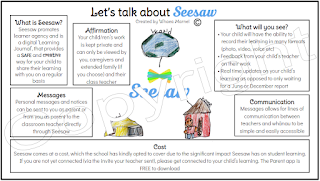
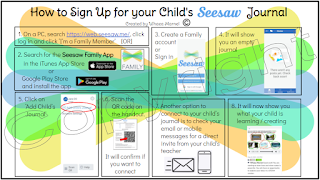
We will also be utilising Seesaw fully this year, to strengthen our school-home relationships. As I have the key role of ICT/Digital Technology Curriculum Manager, I have already ran one PD session towards the end of last year (2021) and also on our TOD to support with implementing this. Sessions to support will continue throughout and as needed.

Here are and example of two posters I created that has been shared with our school community. 


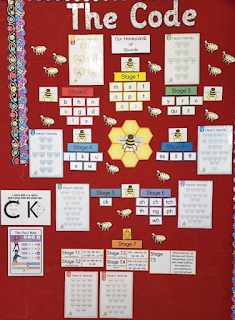
This year will also see me implementing 'Structured Literacy' in class. A new concept for me (therefore, this will be the focus of my Professional Growth Cycle), but I am very excited about the elements of such instruction. Here's my class display...


~ "Our focus is not dwelling on the past, but focusing on the future. The influence you will have looking forward, stepping stones to success for our tamariki." - Our school 'slogan' for 2022 ~


Thursday, May 7, 2020

Thank you, teacher

Lovely to be receiving this during Lockdown: Alert Level 3 - Day 10! Thank you so much @AppleEDU!

We appreciate you today and every day. Thank you for making a difference in the lives of our students and in our communities.

We made this video to celebrate you

Apple Education


Tuesday, April 28, 2020

Distance Learning - T.O.D. Week 3 (Term 2, 2020)

Lockdown: Alert Level 3 - Day 1

We had our T.O.D. this morning through Zoom. We also reflected on the last two weeks' online learning and looked at [some] next steps.

Our school is very fortunate to have no students attending on-site classes from Wednesday 29 April to Monday 11 May 2020.

We will therefore continue to drive online learning for our students over the next two weeks. 


~ "Teachers are the guardians of spaces that allow students to breathe and be curious and explore the world and be who they are without suffocation." - Brené Brown ~

Friday, December 27, 2019

A Year in Review and a quick Reflection

Looking back on my 'I see it..., I want it..., I dream it...' post at the start of the year, my one word was 'SEE'...

Reflecting on my 'SEE'

1. I will be open to seeing the possibilities, the problems, the solutions and the milestones that can be reached every day.
2. Focusing more on the “why”, not just the “what” and “how” when stepping back from the day-to-day planning and details of my work, will allow me to not only see the big picture, but also the immediate achievements and needs.
3. I would like to see that the link between our school, parents, whānau and community where our school's educational goals are concerned are understood and supported. This will enable us to further create and nurture relationships of trust.
4. My job will be done if I could see the simple question “What’s best for ________?” being asked and acted upon. After all, staff well-being is crucial, and it is also our responsibility to ensure that students are excited about learning and to inspire a deep love for learning.
5. I know that the insanely long hours I work, is not contributing to recuperating and focusing on myself. I achieve my goal of seeing myself take time out at least once a week, to 'de-stress' and to improve my work-life balance to avoid burnout.

Highlights for me this year
1. Some of my Professional Development included:

  • Strengths-based Leadership Development - Rob Clarke, Learning Architects (2019 - Current)
  • The Coaching Habit - Anne Giles, Direction Worx (2019)
  • Empowering Leaders to Empower Learning - Leanne Angland (2019)
  • Stress Management and WELL-being - Rotorua AP/DP Association (2019)
  • Igniting your imagination in Digital Technologies and Hangarau Matihiko meetup - MOE (2019)
  • Level 3 Special Learning Disabilities Course - SPELD NZ (2019)
  • HiveSummit (14 day) Virtual Educational Conference (2019)
  • Notice & Adjust: Supporting Students with Learning Difficulties workshop - Neil MacKay (2019)
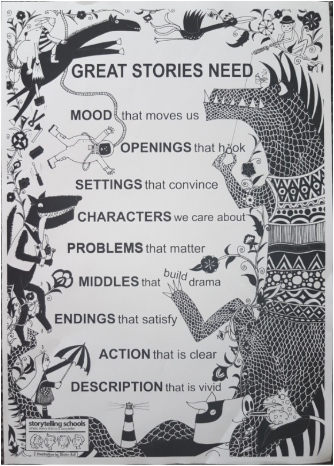
  • Story Ways Literacy: Storytelling Schools NZ (students learn to develop great oral communication skills while mastering the language and ideas they need for subsequent writing) by Liz Swanson (2019)
  • Accelerated Learning in Literacy (ALL) start up workshop - Kath Jones & Colleen Wills (2019)
  • Developing an effective writing programme workshop by Sheena Cameron & Louise Dempsey (2019)
These PD opportunities opened the seeing of possibilities, the problems, the solutions and the milestones that could be reached every day. It also assist in often focusing more on the “why”, not just the “what” and “how” when stepping back from the day-to-day planning and details of my work, which allowed me to not only see the big picture, but also the immediate achievements and needs.


2. Teaching as Inquiry:
After administering an Oral assessment, I analysed the data, which helped me to identify target learners who are ‘at risk’ and their specific areas of need. I then started my 'Teaching as Inquiry' by asking: "How can I use a Storytelling approach to accelerate target learners and enhance their oral language skills through retelling of stories, news, after guided reading & using Seesaw, which will then also result in authentic writing experiences?"
~ 'He mana tō te kupu' - 'Words have great power' - a whakataukītanga kōrero (proverbial saying) ~

I planned deliberate activities that meet the needs of these learners, whilst also capitalising on spontaneous authentic learning opportunities that support oral language development.

Student achievement can be seen as shown in the end of year spreadsheet below.
It should be noted that the my student whom only made 1 Stanine’s progress received Speech Language Therapy support and also has had a Language Learning Intervention plan by an outside agency. Unfortunately, funding for this was only available and in place for Term 2. However, I am pleased with the overall outcome of this inquiry.


3. My Presentations:

  • Digital Technologies | Hangarau Matihiko: Build knowledge - Develop Knowledge - Follow up and teaching lessons, activities and resources provided (Staff meeting - 29 July 2019)
  • Digital Technologies | Hangarau Matihiko: Build knowledge - Develop Knowledge (Staff meeting - 1 April 2019)
  • Seesaw: The Learning Journal - Need to know (Staff meeting, especially for all new staff - 4 February 2019)


4. End of Year Highlights:
I received so many lovely messages and gifts... here's just a few messages... #EndOfYear #FeelingBlessed


~ "The attitude you bring to the day is what the day will bring to you. Great attitude. Great day." - Unknown ~

Saturday, August 31, 2019

Convenient and Flexible Learning

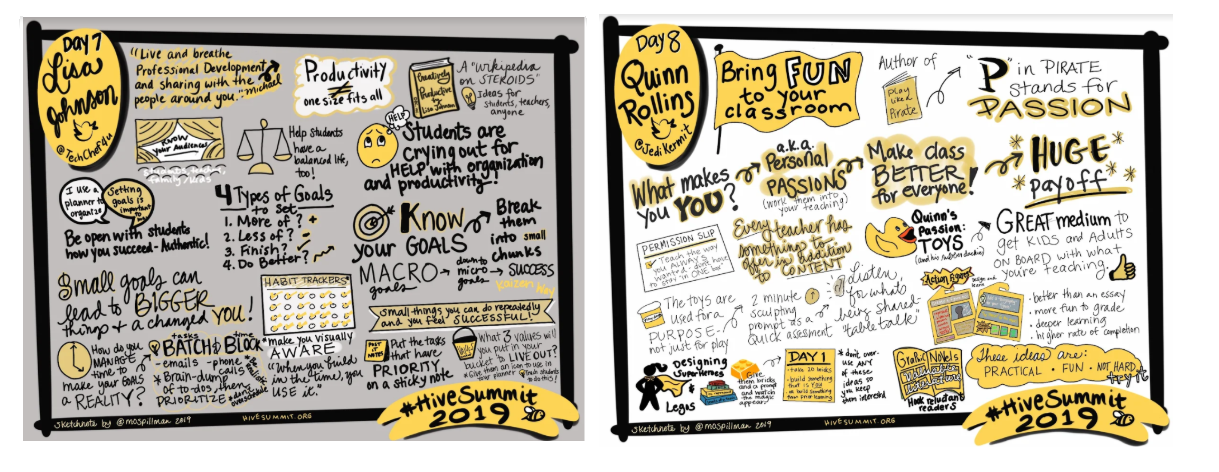
I have had the opportunity to be involved in some online Professional Development this month through the 'Hive Summit', organised and hosted by Michael Matera. 

The themes were:
Day 1: #YouMatter and Day 2: Engaging and Empowering
  • You cannot compete with someone who believes that their contribution is needed by the world” - Angela Maiers
  • We’re not talking about a trick or drop-in lesson. We’re talking about a refined engagement system; something that can be put in place time and time again” - Michael Matera


Day 3: Shaking up learning and Day 4: Relationships 
  • We can’t let our own limitations be limitations for our students” - Kasey Bell
  • Once you know someone’s story, everything changes” - CJ Reynolds


Day 5: Leadership and Day 6: Leadership and Engagement
  • Empathy leads to relationships, leads to advocacy, leads to success” - Ted Neitzke
  • If I’m not excited about teaching it, they can’t be excited about learning it” - Michelle Ferré


Day 7: Productivity and Day 8: Play
  • "There is no 'One Size Fits All' for Productivity" - Lisa Johnson
  • [Students] don’t always get to flex their creative muscles” - Quinn Rollins


Day 9: Self-care
  • We are entitled to self-care” - Dan Tricarico


"The Hive Summit is a conference built for all educators and offers opportunities to learn, grow, and connect." - https://www.hivesummit.org/

Wednesday, August 14, 2019

Collaborative Practice & Team function

Members from our AP|DP Association listened to a presentation on 'Leaders and Learning' (Empowering Leaders, Empowering Learning).

Some 'takeaways'...
  • What a leader believes in his/her core about every teacher's capacity to learn and improve impacts on his/her effectiveness in leading a team
  • The 'Pygmalion Effect' v 'Golem Effect'
  • From the #InnovatorsMindset who quoted Author and human behaviour researcher Tom Rath who notes in his book, 'Strengths Finder 2.)', that, "people who do have the opportunity to focus on their strengths every day are six times as likely to report having an excellent quality of life in general. Clearly we need to make sure our educators and students have ample opportunity to explore and practice in areas which they thrive."
  • Consider the way we function as a team/leadership. The way we function impacts the learning of teachers/students
          The ultimate place for a team's collaboration to fall is in Quadrant I: High functioning, 
          High impact
  • Five fundamental values/beliefs which supports effective leadership:
  1. Collaboration
  2. Shared leadership
  3. Goal setting & attainment (SMA - H(Heart) - RT)
  4. Rigorous discourse
  5. Continuous discourse

We listened to a short extract on 'Disciplined Collaboration'


  • The most powerful professional learning occurs when professionals collaborate, enquire, reflect and co-construct together. In short, inter-dependent learning.
          BUT
  • Simply working together does not guarantee any change or improvement in leadership, professional practice or pedagogy. For this to occur, the condition for collaborative learning and the evaluation of impact need to be firmly in place.

  • Professional collaboration SHOULD have impact, have a purpose, have a hard edge, challenge
  • Feedback are based on our observations and experiences (Appreciative... Coaching... Evaluation...). Key player in feedback is the receiver 


  • Observation and reflective analysis- to empower practice:
  1. Prior to an observation - time to meet and talk to establish clear observation purpose, process, goal - linked to teacher's inquiry goal
  2. Co-construct the effective practice criteria, that the observer will observe
  3. Reflective analysis and dialogue of the lesson - centered around the pre-established criteria and the impact on learner outcomes - how are learners responding and learning? (Responsive & Adaptive Expertise)
  4. Co-construct new/improved practice based on analysis dialogue - set time for follow-up analysis


Question to ponder:
  • How important is mindset in leadership? - What challenges do I see in MY leadership around mindset?


Connecting the learning... Where to next?

  • Leadership styles - self-awareness, strengths, next steps
  • Leading a team - tools and strategies - the HOW?
  • Collaboration with purpose
  • Collective efficacy and Culture building
  • Professional Learning Communities - what/why/HOW?
  • Effective feedback
  • Leadership Inquiry / Learning Inquiry
  • Distributed Leadership
  • Practise observation and reflective analysis
  • Adaptive and responsive expertise
  • Building relational trust
  • Effective communication / Difficult conversations
  • Leading with Emotional Intelligence
  • Innovative Leadership


~ "A leader who helps develop FOCUSED COLLABORATIVE CAPACITY will make the greatest contribution to student learning - Fullan & Quinn, 2016 ~

Saturday, February 2, 2019

Ideas to Supercharge a Literacy Programme

We began our year with the usual Teacher Only Days, with a focus on 'Writing' and 'Speaking'...

On 30 Jan 2019 our whole staff attended a professional learning workshop with Sheena Cameron and Louise Dempsey in Hamilton called 'Developing an effective writing programme'.

They shared practical ideas for planning and teaching writing at emergent, early and fluent levels, with reference to ‘The Writing Book’. Workshop aims were to:
- introduce the key principles of an effective writing programme
- break down the components of a balanced writing programme
- explore the features of both long and short writing lessons

Things mentioned and affirmation:

  • Images are good to use for writing
  •  Reiterate that punctuation helps a reader to understand what the writer is trying to tell
  • Spelling is important (have routines around it e.g. use a word card, listen for sound)
  • Make good word choices
  • Retelling is a very good first step to writing
  • You can keep going with criteria for some time, no need to change it all the time
  • No queue waiting for teacher to check,  just get them to put their book at designated spot after finishing their story
  • Picture plans are good to use in Y1

New ideas / What I've learned:

  • Activate kids prior knowledge about writing at start of year. Ask what they remember about writing from previous year
  • All kids need guiding during week not just lower kids, but don't overstretched yourself… you can't see everyone
  • Roving can be extremely powerful. Students will hear your feedback to others and fix up work
  • Don't waste time writing long, big comments in books
  • Not everyone will finish, be comfortable with it
  • Get kids to self-check / partner-check using stamps afterwards
Next Steps:

  • To use picture plans further as follow: e.g. one picture = 1 sentence, 2 pictures = 2 sentences, progress but not more than 4 pic (as too time consuming)

  • Use different images for kids to write a sentence of each picture


Goals:
  • Model and teach students to proofread their writing. Keep it manageable.
  • Take time to teach students to review and improve their writing with a partner

  • Resources mentioned:
    - The Writing Book
    - The Literacy Shed
    - The Kid Should See This

    --------------------------------------------------------------------------------------------

    On 1 February 2019 we had a professional learning workshop with Lisbeth Swanson from 'StoryWays Literacy' (Storytelling) who visited us at school.

    Purpose:
    - Consider the language needs of learners (Our school, societal, global)
    - Understand the pedagogy of learning and teaching with a storytelling approach
    - Learn how to prepare and teach the telling of a story using ‘Hear - Map - Step - Speak’
    - Know of the key elements in the Storytelling schools Teaching Model


    New ideas / What I've learned:

    • Use storytelling to motivate, energise and accelerate oral language and writing
    • Learning to tell stories from memory is a great way to learn all sorts of essential skills
    • Speaking, listening, confidence, empathy, ideas, facts, sequences, plots … you name it, storytelling can teach it.

    Goals: 
    • Tell a story (not just reading) with attention to voice, gesture, feature language 
    • 'Loiter' with the story - oral language at the center
    • Follow-up writing opportunities


    ~ "Knowledge isn't power until it is applied" - Dale Carnegie ~

    Tuesday, January 29, 2019

    I see it..., I want it..., I dream it...


    With the above as my word for 2019, I will be open to seeing the possibilities, the problems, the solutions and the milestones that can be reached every day.

    Focusing more on the “why”, not just the “what” and “how” when stepping back from the day-to-day planning and details of my work, will allow me to not only see the big picture, but also the immediate achievements and needs.

    I would like to see that the link between our school, parents, whānau and community where our school's educational goals are concerned are understood and supported. This will enable us to further create and nurture relationships of trust.

    My job will be done if I could see the simple question “What’s best for ________?” being asked and acted upon. After all, staff well-being is crucial, and it is also our responsibility to ensure that students are excited about learning and to inspire a deep love for learning.

    I know that the insanely long hours I work, is not contributing to recuperating and focusing on myself. My goal is to seeing myself take time out at least once a week, to 'de-stress' and to improve my work-life balance to avoid burnout.

    Here goes to focusing on the doable... one step at a time, when seeing my 'dream' for those I am meant to inspire, serve and support.


    ~ "I'm sure, that this year, you will find me somewhere in between inspiring others, working on myself, dodging negativity and slaying my goals." ~

    Tuesday, December 18, 2018

    A Year in Review

    Looking back on my 'Walking on a tightrope' post at the start of the year, my one word was 'DO'...

    Reflecting on my 'DO'
    1. Get-up-and-Go (be determined and full of energy) - This I have definitely achieved in all areas this year. 
    2. Stop and celebrate [even little] Successes - Yes, not only did Seesaw's ePortfolio enabled me to regularly check in and comment on students' progress, which has been celebrated weekly by a 'Virtue award', but progress was recognised and celebrated almost daily in our learning environment. 
    3. Look after myself (no school work after 6.00 pm) - Although I did look after myself, I was not able to do no school work after 6.00pm... in fact due to all my responsibilities, I have been working later than I have last year, even during weekends! Maybe this goal was a bit unrealistic?
    4. Continue DOing [something] despite difficulties (stick-to-it-iveness) - Thankfully, I did not experience any difficulties (personally)
    5. Do what I believe to be best for ALL my students as they are my number one priority - As I understand the importance of inclusive education and that for some learners to access the curriculum and realise their potential, I was able to focus effectively on curriculum adaptation and differentiation.
    6. In my role as Assistant Principal and ICT Lead, I will take the 'bad days' in stride and remember that I get to start fresh tomorrow - One of my leadership strengths, I believe, is to actively support colleagues, reframe dialogue/thought processes to eliminate deficit thinking and focus on the capabilities, progress and successes. I have been able to transfer this effectively in my leadership role, enabling and fostering a positive, safe and united culture where successes are celebrated with all staff. As an effective communicator, I demonstrated exceptional communication and interpersonal skills in my current roles, supporting staff as and when needed. 
    7. Blog more regularly - Not yet...

    Highlights for me this year
    1. Some of my Professional Development included:

    • SENCo Development and Training online course/study through Raising Achievement
    • Embedding Oral Language Across the Curriculum workshop by Sheena Cameron & Louise Dempsey 
    • Anxiety, Learning and Behaviour workshop by Dr. Izelda Pelser, Educational Psychologist, MOE 
    • ‘The Developing Brain’ workshop by Nathan Mikaere-Wallis 
    • Online training to be recognised as a Seesaw Ambassador
    • Digital Passport: Workshop One - Years 1 - 3 Certificate 
    • Digital Passport: Workshop Two - Years 3 - 5 Certificate 
    • ‘Setting your School up for Success’ seminar for SENCo / RTLB / RTLit
    2. My Presentations:

    • Digital Technologies & Hangarau Matihiko: Build awareness and mobilise (Staff meeting - 11 June 2018)
    • Collaboration for Success: SENCo and Learning Difficulties (Staff meeting - 28 May 2018)
    • Digital Citizenship & Cyber Safety (Staff meeting - 14 May 2018)
    3. Teaching as Inquiry:
    After administering an Oral assessment, I analysed the data, which helped me to identify target learners who are ‘at risk’ and their specific areas of need. I then started my 'Teaching as Inquiry' by asking 'How can I enhance students’ oral language skills through retelling (news & after guided reading) using Seesaw, which will then also result in authentic writing experiences?'

    I planned deliberate activities that meet the needs of these learners, whilst also capitalising on spontaneous authentic learning opportunities that support oral language development.

    Student achievement can be seen as shown in the end of year spreadsheet below. 
      
    Although Student 4 still requires some support (student had trouble with attendance), I am pleased with the overall progress.

    4. Other:


    5. End of Year Highlights:
    I received so many lovely messages and gifts... here's just a few messages... #EndOfYear #FeelingBlessed


    ~ "Teachers should not forget how far they take their students every year" ~

    Saturday, September 29, 2018

    CoL TOD - Taking our Community on a Journey


    Outline of my involvement during the Day...

    Moral purpose

    1. Recap Appreciative Inquiry & Sharing of Teaching as Inquiry
    Adjusting the lens we look through - Making a conscious decision to look for strengths.
    Coaching skills to be used - active listening - without interruption and reflective questioning at end. 
    Genuine Inquiry - open minded, declarative statement or genuinely open and non judge-mental reflective question
    Positive does not ignore deficits but instead focuses on the solution

    2. Evaluating Effectiveness
    Hard data vs rich data - formative, making sense of the work children are doing, the shifts they are making.
    Appreciation - how do we talk about the hard stuff - challenge each other - to ask a probing reflective question does not show lack of appreciation - the way the question is communicated is possibly the key - today and the way we are working together is about digging deeper - in a non judge-mental way.  Holding up the mirror
    Sometimes in our work as Principals, DPs, or HODs we work in a mentor role where there may well be an element of judgement and direction in a learning conversation, but this approach is not about mentoring - it is about listening to understand and asking probing questions to deepen understanding and to require the presenter to deepen their reflection.

    3. Knowing they impact
    Knowing they impact - if we are to be innovative as a profession and if we are to make a difference for kids we need to work through ways of knowing and justifying what works and why. - as a profession.
    The way you think about your role as a leader or teacher defines the way you work and the impact you will have.

    4. Oral language focus - What has been the effect of the work you have been doing with students?
    Ask reflective questions - in line with coaching- levels of reflective questioning.
    Have levels of questioning for students.

    5. Disrupting the status quo
    How can we create a learning system where all young people leave as successful learners.
    Not about cruising through the system or dumbing down learning.

    What are the rich skills we want to assess? (that would enable this goal)
    What do young people need to know/do? 


    6. Bus stop activities


    7. Evaluate well-being 
    Discussion:  Looking at ways the current system might impede well-being and success.

    Evaluate personal identity, language and culture (Do I know the language of mine) 
    We become our stories – so... What are the stories we want to tell about Reporoa? What does it mean (look like, sound like, feel like) to be an actively involved, confident, connected member of our community?
    What is already working well in our community? Who are our success stories? What worked well for them?
    What part do you play in this? What is your responsibility in this story?
    What do we expect from each other and from ourselves?


    ~ "The manager accepts the status quo; the leader challenges it." - Warren Bennis

    Friday, August 24, 2018

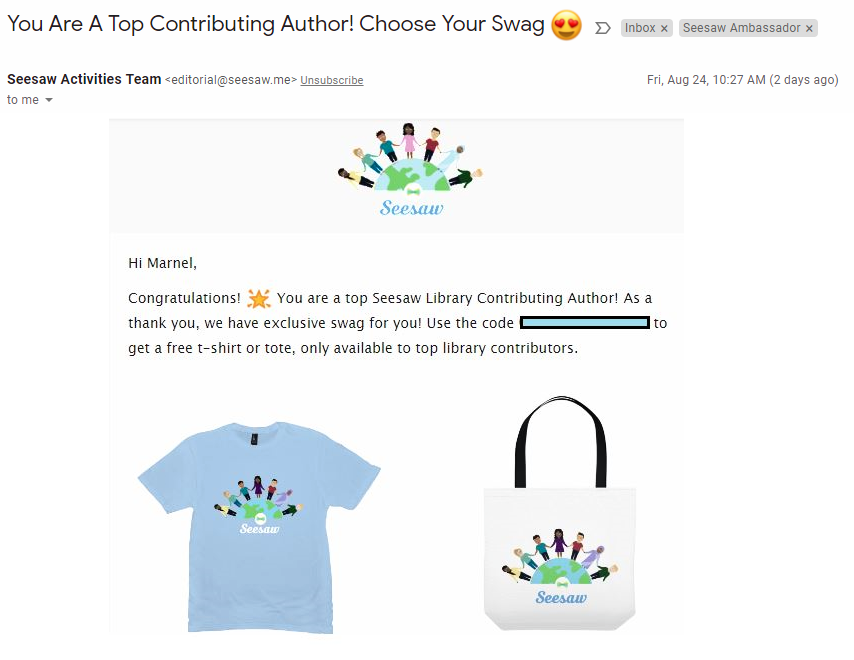
    Seesaw Contributing Author

    I am sharing activities I create on Seesaw (for my students) with other teachers (over the world) to use too.
    Received this email in recognition from the Seesaw team in the USA. How uplifting! 

    Thanks Seesaw!


    Friday, August 3, 2018

    Further assessing children identified as 'at risk'

    As part of my online SENCo training, I had an opportunity to work with and learn from Jenny from Raising Achievement on assessing students identified as 'at risk' to further identify their specific learning difficulties using a Screening Assessment kit. This will be very helpful in my role as SENCo and will enable me to create a specific plan to help cater for the needs of these students.
    The purpose of the Screening Assessment is to find underpinning cognitive weaknesses. These are the underlying reasons why students are being held back and not able to achieve in academic subjects. Underpinning Cognitive Weaknesses are Auditory and Visual Processing problems. Other Underpinning Cognitive Weaknesses are things like processing speed, short term and working memory and gross and fine motor skills.

    I learned about the different Screening tools and what to use for students under the age of 7. Yes, it can be done under 7... and [in my opinion] early identification is vital.

    Reflection:
    I am absolutely loving my role (on top of everything else) as SENCo. It is rewarding to see how students progress when given extra support and to see their confidence grow!

    I am looking forward to implement my new learning into my role to support students, teachers and teachers' aides.


    ~ "A child with 'special needs' will inspire you to be a special kind of person. - Anonymous ~

    Tuesday, July 10, 2018

    Local stories - some of the history...

    I spent a lovely day at Ohaaki Marae (with some colleagues), learning about the local stories of Ngāti Tahu-Ngāti Whaoa...

    The Māori of the valley decended from the Arawa tribe. The Ngāti Whaoa moved inland from Maketu to Wai-O-Tapu (Māori for "sacred waters") and the Paeroa Hills.

    Ngāti Tahu maintain a separate identity, but they have also been described as subtribe of Ngāti Tuwharetoa (who originally lived in the Kawerau area). His people are descended rom both Te Arawa and Mataatua (particularly Ngāti Awa ancestors). 

    From the earliest times the Waikato valley near Orakei Korako was occupied by Maori of the Ngāti Tahu.

    The names of the meeting houses of Ngāti Tahu Marae reflect their tribal history. Te Ohaaki is the parent marae and the meeting house is called Tahumatua, after their eponymous ancestor. Ohaaki has many claims to fame. It has unlimited supplies of hot water and steam and had one of the biggest and most beautiful thermal hot pools in the Rotorua-Taupo region. Unfortunately, the natural features at Ohaaki have been irreparably damaged by development for power generation.

    The Paeroa ranges had once been occupied by the Tribe of Whaoa and at Waitawhero a meeting house was built which was named Whaoa. The south of Mangakara was once occupied by the Ngāti Tahi Tribe and north it was occupied by the Whaoa Tribe. 

    Learning a Waiata...

    E ngā iwi
    E ngā mātā waka
    E ngā hau e wha
    Anei rā
    Ko tāhū whaoa
    E tū atu nei
    Kia whakatau i a koutou
    I te nei ra
    Tū mai rā Paeroa
    Hei whakaruru hou
    Mo te
    Hui aroha


    Glossary of word meanings:
    iwi - people / tribe
    mātā waka - every 'waka'
    hau - wind
    anei ra - here we are
    whakatau - informal greeting
    I te nei ra - on this day
    Paeroa - long ridge
    hei - as
    whakaruru hou - shelter
    mo - for
    te - the
    hui - gathering

    This day contributed in developing a deeper understanding of culturally responsive and relational pedagogy


    ~ He aha te mea nui o te ao, he tangata he tangata he tangata (What is the most important thing in the world, it is the people, the people, the people.) - Māori proverb ~

    Monday, May 14, 2018

    Digital Citizenship & Cyber Safety

    Leading today's staff meeting around Digital Citizenship and Cyber Safety, I talked about what we will be looking at achieving...

    1. To become more informed and vigilant
    • Only identify students by first name on ePortfolios and if it can be helped at all, don’t have a name by a photo, rather have more than one student in the photo.
    • Teacher to moderate posts
    • Search yourself online and see what comes up...

    2. Teachers to focus on guiding and supporting students with having a safe, positive and creative online behaviour / Teachers should MODEL
    • No passwords printed out to be displayed / laying around
    • Teachers and student user agreements (log out of emails / accounts)
    • Check out the Finesse with ICT site that I’ve compiled and shared in the Team Drive for lots of things around ICT
    3. Deliberate teaching of Digital Citizenship / CyberSafety

    4. Photos / Pictures and Copyright
    • A lot of times, students and teachers use pictures / photos from Google images. They all state ‘images may be subject to copyright’. Teach students not to use this. 

    How do you know if you can use an image from Google Images?
    • Find images, text, and videos you can reuse
    • Go to Advanced Image Search for images or Advanced Search for anything else. However, often they are still ‘maybe subjects to copyright’
    • In the "all these words" box, type what you want to search.
    • In the "Usage rights" section, use the drop-down to choose what kind of license you want the content to have.
    • Select Advanced Search.
    A place to access safe images that are available to be used in the classroom and for educational purposes is http://photosforclass.com/ and citations are watermarked onto downloaded images.


    ~ "It's imperative for us to model digital citizenship to even our youngest learners." 
    - Beth Holland ~

    Saturday, May 5, 2018

    Recognition...

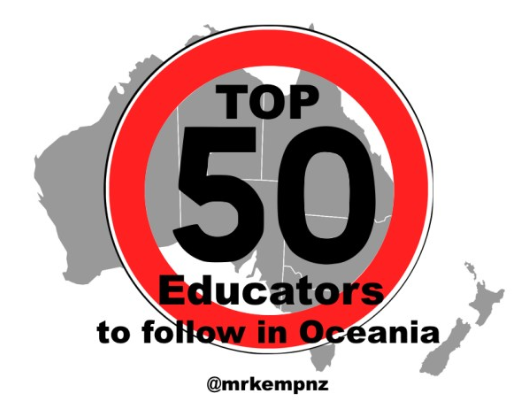
    I have been using Twitter regularly as a tool to learn more and to share my learning, therefore, I felt honoured to receive this great recognition from Craig Kemp, an awesome international educator, within his blog post... '50 Australia/New Zealand Based Educators to Follow on Twitter'.